Portfolio-05/02/2026
Flexion: The Intelligence Problem in Robotics
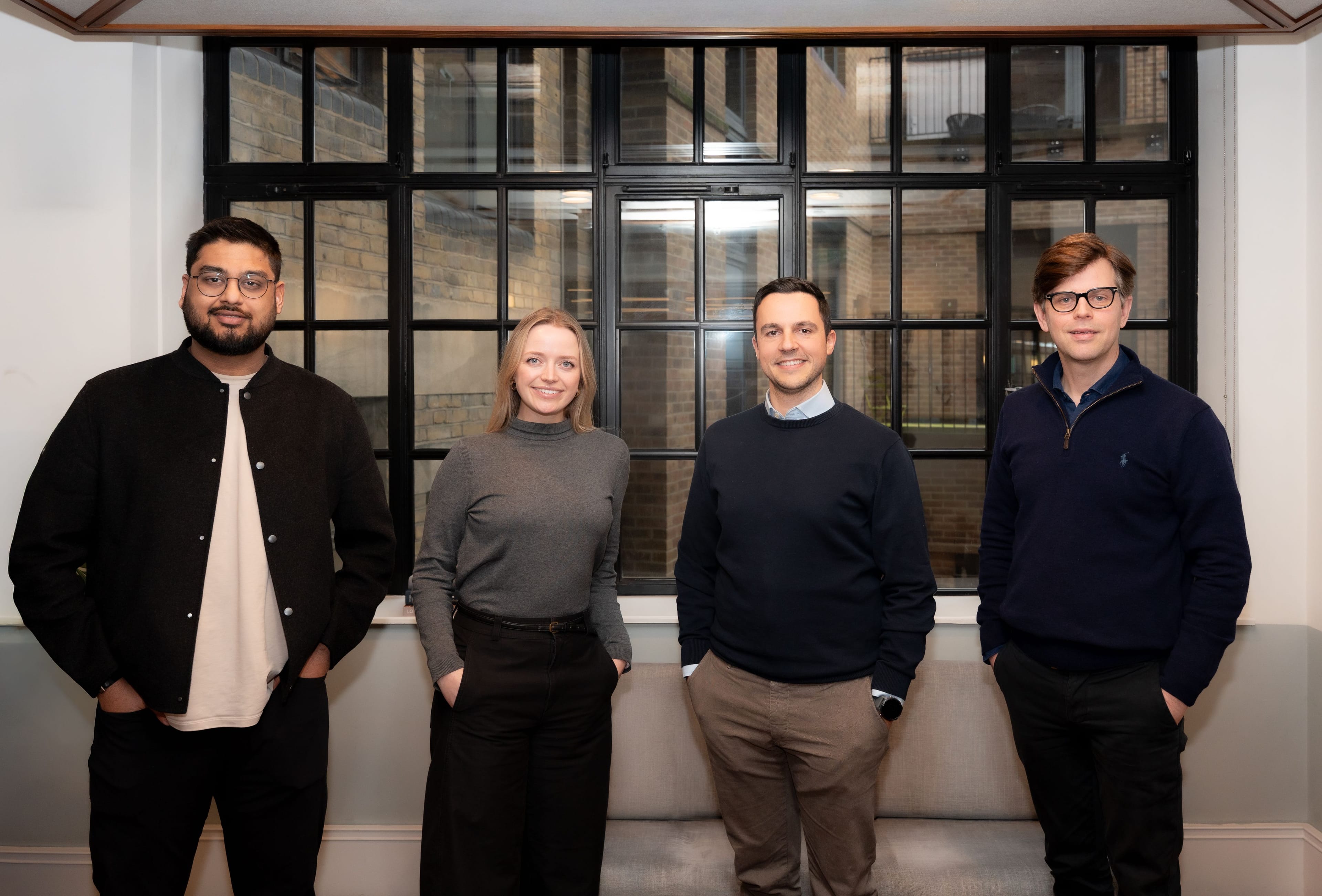
Akshat Goenka sat down with Nikita Rudin, Founder and CEO of Flexion, to talk about the problems constraining progress in robotics and how they will be solved.
Building intelligence
Akshat: Nikita, thank you so much for joining me and doing this today. We really like to spotlight our amazing founders and portfolio companies, learn more about them, and share the things that they're doing, and also use these interviews as a way to get a little bit more of a glimpse into the life of a founder building in an area that's somewhat uncertain, but also very exciting.
So, with that said, I would love to learn more about you right now, especially for all of those who are new to Flexion. How would you describe what you're building, and can you tell us a little bit about what sparked you to start this company in the first place?
Nikita: Thanks, Akshat. In a few sentences, we are building the brain to power all sorts of robots, including humanoids, but also many others. We're building the intelligence layer, the software that can be deployed to different kinds of hardware embodiments. And the key thing is that we want to make all these robots smart enough to work in the real world. And by that we mean doing manual labor that is dirty, dangerous, dull, that humans don't want to do anymore.
As to what sparked this, before we were all co-founders, all of us worked in big tech, and also did PhDs, actually in the same lab at ETH in Zurich. And through our different companies and the PhDs, we interacted with many, many companies building different kinds of robots, a lot of humanoids, but also quadrupeds, mobile arms, anything you can imagine.
“The intelligence layer…should be a horizontal platform”
And we realized that they're all missing the exact same thing, which is the intelligence layer. Most of these companies were in some way, trying to do the whole thing in-house; our key takeaway was that it should be a horizontal platform. Since everyone needs the exact same thing, it doesn't make sense for all of them to recreate it and compete with each other in that way.
So this sparked us to leave our jobs and build Flexion.
AG: That makes a ton of sense. And yeah, I think this kind of horizontal layer of intelligence, of the robotic brain, as you've called it before, makes so much more sense, especially as you think about kind of a standard intelligence layer that cuts across different types of robots, etc, and gives them a more standardised operating system.
Now or never
Something that you touched on there, Nikita, was the fact that you and your co-founders were in academia together, doing a PhD at the ETH. As you'd expect, it's not every day that academics suddenly take a leap and build a startup, raise venture, go after such an ambitious vision. Was there a particular time, or a particular insight, or an external factor that really made you feel like this is it? This is the right time for us. We have the right team to do this.
NR: It's hard to say if there was one very specific thing, but I think in the end, we were in the right place at the right time. Robotics is happening now. I like to say it in two ways, optimistic and pessimistic in one sentence. I think robotics is not solved today, despite what you might see online, but it is solvable, and it will be solved in the next few years. So, if you want to build something in robotics, well, build it now.
“Robotics will be solved in the next few years. So, if you want to build something in robotics, build it now”
We were interacting with many, many different companies, pretty much everyone out there. And basically, we thought that if we were not going to build a company ourselves, we would have to choose one, and we realized that, well, we don't want to choose just one out of those 100 companies. We're going to build our own thing.
AG: I've obviously had the benefit of having a little bit of a sneak peek into your demos already, and the amazing things you're doing, as well as the benefit of coming to Zurich and seeing your office and seeing the robots there, and to date, it was one of the most game-changing experiences for me. For you, it's probably normal because you see them all the time, but for me, that was amazing, and I must have spoken to my wife for hours about it.
Robotics form factors
In the conversation we've had so far, you've mentioned humanoid robots three or more times, more than anything else. What's the cause of this fascination with humanoids? What's this deeper conviction behind potentially choosing humanoid as a form factor?
NR: Let me take a quick step back. When I say humanoid, I mean it in a more general sense. Honestly, we use it for lack of a better word. I think all of us together as a community need to come up with a better word. What we mean by it is a robot that has human capabilities, which means a robot that can go anywhere a human can go and can manipulate the environment in a way a human does.
It doesn't necessarily mean two legs, two arms, and a head. It can have different form factors. It can be on wheels. It can have more legs, more arms, et cetera, et cetera. But that robot should be able to do a significant portion of what a human body can.
The reason for that is there are two ways to do automation: There's the old way, which is, you have a factory full of people and you send in, I don't know, one hundred engineers who will analyse every single motion and plan a whole new production line. This will take months and months, maybe years. Then you have to shut down the whole thing, get rid of all the people, install a ton of robots, you know, those big Kuka ABB, Fanuc, et cetera, arms. And then you still have to fine-tune those robots for months because they need to do the same motion over and over again. So the whole process is extremely expensive and extremely slow. It can be years and can easily be billions of dollars for one single factory.
And then the other version, the one we are trying to create, is the opposite. So you bring the robot in a box, you open the box, the robot stands up, and they just go to work. And for that to be a drop-in replacement for humans, well, you need to be able to do all the sorts of motions and jobs that humans do.
AG: It’s great to hear you say that robotics is not solved right now, but that it is solvable. I think across the board, we are seeing a ton of excitement, and potentially noise with all of these different companies releasing amazing demos, amazing capabilities of both humanoid-looking robots, but also other form factors of robotics.
Is there something that you feel across these organisations is misunderstood about what it really takes to build the right solution? I know we can spend hours talking about each company. That's not what I want to do, but I want to understand, for the listeners, for us as investors, is there something that we can learn from a practitioner like you about what's not being focused on?
NR: So, going back to the demos, they’re really great, and a lot of them are really impressive, and we see a lot of progress, but still, they're just demos, and people have to realise that.
Most of the time they're not AI-generated, it's actually a robot doing the actual thing. But one of two things is typically true: either you have someone hiding behind a curtain tele-operating the robot, and there is a very big company that does that, I won't mention names.
Or, the robot is actually autonomous, but, before filming the video, there was not one, but a hundred people operating one hundred robots in that exact setup to collect data of the robot doing that very specific thing, and then they can train some sort of neural network to make robots autonomous.
“We train neural networks to control the robots in simulation, where we have 1000s of robots training in parallel, all collecting data”
That is a fairly easy and straightforward way to get to demos, in my opinion, and in Flexion’s opinion, that's not the right way to actually build the intelligence layer that’s supposed to power robots everywhere on Earth. So, very specifically, a lot of these companies are focusing on tele-operation and collecting real data one way or another, whereas we bet on synthetic data; we want to leverage simulation as much as possible - not having humans in the loop for data collection. It's a little bit harder at the beginning to get to shiny demos, but it will scale much faster once it's unlocked.
The Sim to Real gap
AG: That makes a ton of sense. We spoke at length about sim to real (simulation to reality) and that transition when we were investing. It seems like a lifetime ago, but it's only been a year or so since we first met.
Can you tell us a little bit more about this synthetic data pipeline and how that could create the structural edge? Maybe it takes longer to get the shiny demo, but over time, would that be a compounding moat or advantage that you have?
NR: We're leveraging two key technologies, reinforcement learning and sim to real, meaning that we train neural networks to control the robots in simulation, where we have 1000s of robots training in parallel, all collecting data. So we're collecting data literally 1000s of times faster than if you were to do it in real life.
Reinforcement learning means that we're not telling the robot exactly how to move. We're just giving it a slightly more abstract task. If it's walking, then it has to walk without falling. If it is manipulating an object, it has to grab an object and bring it somewhere else.
So you define those tasks, and then the robots just keep trying on their own until they progressively figure it out. It takes a very long time in the simulation. So it's tens, if not hundreds of years of simulated data. But since it's 1000s of times faster than in real time, it's just one or two hours of computation on a few GPUs.
And then sim to real means that, once a neural network is trained in simulation, you can transfer it to the real world. If you just do it naively, it doesn't work, and that's where you need a lot of expertise. It's impossible to recreate exactly the setup of the real world in simulation. But you need to know which parts are important and where you need to model carefully.
We use something called domain randomisation. So, you might randomise some of the properties in simulation, but you don't want to randomise everything, because if you randomise everything, then you create too much variability, way more than is actually needed to deploy in real life, and you're making the job of the learning process just harder. So this is where our expertise comes in - how to cross the Sim to Real gap - for all sorts of different robots across all sorts of different tasks.
AG: That's awesome. It's great to see your excitement as well, which comes up as soon as you start talking about this tech, especially on where that tech would provide such an important defensibility advantage for you - it makes sense that that's what gets you energised.
I think I probably know the answer to my next question already, but I would love your perspective as someone who's spending a lot more time in robotics right now. Where do you think the industry in general is underinvesting? Is it in simulation? Is it in the data? Is it in hardware? Is it in something else entirely? Like, where would you want investors to put more money in right now to get to solving robotics faster?
NR: It’s interesting, you say you know the answer, but I’m not sure I do!
I think the industry is over-investing in those so-called data collection farms. Recently, I was on a trip in China, and I saw many of those companies building these huge warehouses filled with people who operate these robots collecting data without knowing really what to do with the data. Just let's collect it, and we'll see later what we do with it. So I think we're over-investing in that.
Obviously, I guess the counterpart of that is under-investing in the kind of technology that I mentioned before, which is simulation technology and sim to real.
Parsing advice as a founder
AG: Makes a ton of sense. I would love to change the topic and learn more about you, right?
I think that at such an early stage, the founders are such an important part of the company. It was Mattias and Mike's ability to meet you, learn more about you, and learn more about the team that got us really excited.
As you’re building Flexion, you probably got a lot of advice from investors, commercial partners, et cetera. How do you go about deciding what you should be focusing on? What's that mental framework that allows you to either say “hey, this is a distraction” or “this is something that we should be working on”?
NR: Actually, a very specific piece of meta advice that I got at some point is that my main job is to create a world model of the person giving me advice, understanding why that person is giving me that specific piece of advice at that moment, because that specific person might be amazing, but they only have partial information. They probably have their own incentives for whatever reason, and they might be absolutely correct or completely wrong about something. And so in the end, I guess my job is to talk to a few people for each piece of advice, understand why they responded the way they responded, and then use that to make a decision.
“My job is to create a world model of the person giving me advice, understanding why that person is giving me that specific piece of advice at that moment, because that specific person might be amazing, but they only have partial information”
AG: I think that introspection is so helpful. Is there something that you know now, having been working on this for the last year, that you wish you had known earlier, or someone would have told you about earlier? Whether it’s around building teams, understanding the technology, or commercialising the product?
NR: All of the above.
I guess I don't have one very specific thing that, if I knew that piece of information when I started, everything would be different. I think it's just that there are so many things you have to take care of and worry about while building a company that I had no idea about most of them just a year ago.
Everything from fundraising to recruiting, but also building a brand, talking to lawyers, dealing with visa issues for employees, every one of those things requires attention and requires some level of expertise to be able to make a decision on the spot.
AG: Yeah, from my perspective, seeing you along the fundraising journey, what really stood out to me was that there's an aspect of founders being coachable, which means that they very quickly become a sponge and learn from those around them.
Much harder to do is being coachable, but still having that high intensity, high intellectual horsepower to ask the right questions when someone is giving you advice to make sure that it fits well with your worldview.
Speaking to you quite regularly during your fundraising process, it was clear that you possessed that. So when there was something that you don't know, you not only wanted to know it, but you wanted to know the why behind it as well.
I think that curiosity, that intellectual curiosity, and desire for intellectual honesty will hold you in great shape, not just for fundraising, but also building the company that we all hope and are confident that you will end up building.
I think the question on the back of that is, is there a founder or company that you really are curious about, or that you really admire, that you have gathered certain traits from?
NR: That's a good question. The first answer I want to give is, I'm a huge fan of all the robotic startups that are around us in our building, in our city. I can mention 10 different names: RIVR, Mimic, Verity...
“I specifically admire startups in Europe that don't try to be the European version of something in the US, but actually position themselves as the leader in that category”
...Gravis is a great one - people don't mention them enough - they're automating excavation. That's one area where you should not use humanoids, it doesn't make sense.
And then, in general, I specifically admire startups in Europe that don't try to be the European version of something in the US, but actually position themselves as the leader in that category. For example, I'm thinking of ElevenLabs. I think they are the reference for AI-generated voice and I think that's amazing.
Why Moonfire
AG: So many great startups here in Europe. I've always been told that I have a habit of making interviews a little bit about myself and Moonfire. On that front, what made you want to partner with Moonfire? From my perspective, you were one of the most exciting companies while you were fundraising, and I don't know the details, but I'm sure you would have had access to a lot of different funds that you wanted to work with. What made you want to partner with us? And do you regret that decision at all?
NR: No, I definitely don’t regret that at all!
It's a mix of two things, the technical ability of your team and their backgrounds, plus how available you were during the process
The fact that we were able ask, to be honest, fairly naive and ask beginner questions, and that you were always really available to answer anything, that was really helpful, and I think that's exactly what we needed at that stage, at the very, very, very early days of building a company for the first time.
AG: I was speaking about this with a first-time founder just before this call.
You need to give them the space to ask any and all questions because that's how they'll learn, right? That's how they mental model towards entrepreneurship.
So thank you for that. It made me a little bit giggly inside, which is always nice.
The future of robotics
I do want to speak a little bit about the future, particularly robotics' future. When people think about robots in the world, their imagination runs wild. I think one very broad question I would have is, how do you envision human-robot interaction 10 years from now, or any arbitrary timeline for now? Are they going to be copilots, doing things with us? Are they going to completely replace humans? How do you expect this to play out?
NR: Yeah, I think it really depends on the number of years that you would put into that question.
I don’t think there will be a ChatGPT moment of robotics that everyone's talking about, where you have zero robots and the next day, you suddenly have a million of them. The obvious reason for that is that you need to build robots. It's not software that you can copy and paste. It will take time. The more subtle version of that is that it won't be as easy to automate all the different types that robots need to do. It will still require a little bit of work for each category. Maybe it's warehousing in factories. Maybe at some point, it's going to be robots in our homes, and all those different things will require some effort.
So we'll start to see robots pop up here and there. And I would say in something like five years, it will be fairly normal to see a robot here and there on the street. It will probably be like Waymos in San Francisco right now. It's still exciting. You still want to try it. You want to take a picture when you see a robot.
But then, after some point, it's not that interesting anymore. I think a few years after that, it will be completely normal. You won't turn around anymore; it’ll be completely normal to see humanoid robots, or again, other kinds of robots doing just normal, everyday tasks around us.
AG: I hope so!
We've discussed factories and warehousing and manufacturing, and a lot of people, when they think about robotics, they think about these verticals, because these industries have a high capital intensity, and a lot of 24/7 human labour that you want to try and either automate or displace.
You mentioned excavation, now you even mentioned robots in the home. Is there a particular robotics use case that is maybe not feasible, maybe not possible, but that is particularly exciting to you as just like someone who wants robotics to be there? Is there some crazy moonshot use case that most people have not thought of?
NR: It's a great question. Well, there is one crazy moonshot, super exciting use case, which is space exploration.
If we want to build a colony on Mars, we should send robots before we send humans. And I'm sure the first starships to land will be filled with humanoids, or quadrupeds, or whatever. Some form of legged robot that can actually do something on the planet.
But coming back down to earth, there’s one much less exciting use case that people don't really talk about that I think we should focus more on: Everything related to cleaning and trash collection, processing recycling, and all of that.
I think it's an amazing use case for robots; it is literally the definition of a dirty job that humans don't really want to do. We're actually alluding to that a little bit in the video that we released.
AG: It’s a great video. Being in a country like Switzerland to shoot your videos is an advantage in itself, and something very apparent in that video!
In a lot of the industries you’ve outlined, there would be an entire aspect of human displacement. This is a little bit of a tricky question, because no one exactly knows how this is going to play out. But how do you expect regulators to come in, what is going to happen, or is most likely to happen as of right now, in terms of protection of employment or giving people the rights that make robotics maybe a little bit slower in adoption?
NR: That's a very important question. Of course, I don't have the absolutely perfect answer.
“AI is replacing all sorts of intellectual, creative, and even academic jobs, whereas the manual part is still left to humans. If you extend that trend, we will be just the hands controlled by an LLM…and the way to change that is to have robots do the manual part”
I think in the short term, we should not over-regulate, because again, the transition won't be as fast as people think. It will really take time. So there won't be any significant impact on the scale of an economy or a whole country in the short term.
In the long term, I think it will be a net positive. So robots will be doing all sorts of manual jobs, repetitive, dangerous things that we should not really be doing.
And, if I can take a small tangent, what we see now is that AI is replacing all sorts of intellectual, creative, and even academic jobs, whereas the manual part is still left to humans. If you extend that trend, we will be just the hands that are controlled by an LLM, and we should really change that, and the way to change that is to have robots do the manual part.
So long term, I think we'll be in a great spot. At that point, we will need to transition to a different type of economy. We'll need a universal basic income or something like that. I don't want to give a very specific solution, because I don't have it.
I think the tricky part is the transition is the part in the middle.
So what I would encourage regulators to do is be ready to add regulation, but not overregulate ahead of time, because otherwise you might just slow everything down.
AG: You spoke about long-term there. Last question: If everything goes as per plan and Flexion executes and achieves and succeeds in everything that you hope, what do you see this company becoming? What do you see, maybe written about you and Flexion, what do you think this becomes? What do you hope it becomes?
“I think the best way to put it is, I hope that in five years, someone will say we want to be the Flexion of something else!”
NR: I hope that we will actually have millions, if not billions, of robots operating outside, inside, in our everyday life. And then for Flexion, we want to be the software that powers a very big portion of all of these robots. And then you can always say we want to be the Microsoft of robotics, or the Android of robotics. I think the best way to put it is, I hope that in five years, someone will say we want to be the Flexion of something else!
AG: Amazing, Thanks. Nikita.

Authors
Sign up for more like this
Stay ahead of trends, get a roundup of high-quality content in your inbox every month.